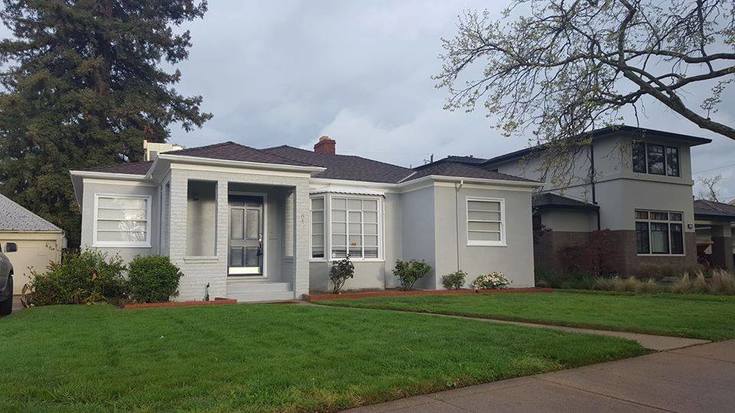
If you are a buyer out there looking to buy in Sacramento right now you are probably quickly realizing that this so called "buyer's market" is a lot more challenging than you expected. The inventory in Sacramento county has not been this low (especially in the core areas of Sacramento) since 2005. What does that mean? It means that there are more buyers out looking for homes than there are actual properties available for sale. You may wonder how that is possible considering we have had one of the biggest downturns in the real estate market in history trailing only behind the Great Depression. Although the banks hold hundreds of thousands of properties in their inventory they are not releasing them for sale on the open market and or pricing them to sell at auction. By the banks holding the inventory it gives us a sense of false stability as we only see what is on the market and all of our data and research is based on the actual REO and resale properties that are listed and sold. Steve Beede gives an outstanding outlook on what is happening more and more now in our market (in article below). Banks are now exploring selling properties by the thousands to investors that are holding them, renting them and making money on managing the homes. Crazy. This could mean a good thing for values of resale properties and because of the limited supply we may start seing a very very gradual increase in home prices. We will see what happens as it is all pending how the banks proceed with selling their inventory. That being said... if all bank owned properties were to hit the market today it would detroy values and turn us upside down again. Read the great article below by
Steve Beede!
Tom Gonsalves
WILL LENDERS BY-PASS THE REAL ESTATE INDUSTRY WITH BULK SALES?
Last week, billionaire investor
Warren Buffett said that if he could manage
them, he'd like to buy "a couple of hundred thousand single family homes."
Well the lenders have been listening. Within hours of his comment, the regulator
of Fannie Mae and Freddie Mac put about 2,500 of their foreclosed properties up
for bulk sale directly to investors. It is the next step in the government's REO
(bank-owned) to rent program designed to help Fannie and Freddie unload
thousands of foreclosed properties weighing on their books.
Between them, Fannie Mae and Freddie Mac own more than 200,000 foreclosed
homes. The Federal Housing Finance Agency (FHFA), which regulates Fannie and
Freddie Mac, expects it will receive a considerable number of bids in April for
the initial round of 2,500 Fannie-owned homes in cities like Atlanta, Chicago,
Los Angeles and Phoenix. They've already received expressions of intent from
4,000 investor groups and other organizations.
And the banks are watching. The nations banks own more than 600,000 single
family homes according to Realty Trac and they too would like to get rid of
their inventory quickly. Bank of America has announced its own plans to sell its
REO properties in bulk to investors. These properties will not be available to
individual investors or possible home owners. Selling in bulk will allow Bank of
America's REO department to avoid paying commissions, brokerage fees, escrow
fees, and much of the various costs involved in a typical home sale.
Critics, meanwhile, contend that such sales will cause at least two major
social problems:
1. Bulk Sales destroy social benefits of home ownership - governments
have long recognized that home ownership brings stability to communities,
particularly inner cities. Programs such as the Community Reinvestment Act of
the 1970's and similar later programs fostered greater ownership amongst those
who would otherwise be shut-out of the home ownership market. While deregulation
let this process run out of control leading to the current recession, the
underlying concept remains vital to the growth and stability of our nation. Bulk
Sales will transfer increasing numbers of these properties to big fund investors
potentially turning us into a nation of renters instead of a nation of
owners.
2. Bulk Sales damage the Real Estate Industry - the real estate
profession exists in our Country to provide professional, dedicated, and
organized expertise in the sale of real property as a third party intermediary.
They bring together buyers and sellers and make certain that required
inspections and disclosures occur thus creating transparency and credibility in
the real estate market. In an industry already ravaged by dramatic reductions in
earnings and inventory for sale, bulk sales will put many brokerages out of
business and force more professionals to abandon their careers. Of even greater
worry is that bulk sales may lead to lenders moving back into direct selling
competition with agents and thus trigger another conflict of interest mess as we
saw in the 1980's.
We'll keep you informed in future E-News updates as this issue evolves.
Meanwhile, if you or someone you know is struggling with an upside-down property
in California and don't know what to do, our $200 flat fee Consultation Program
can offer knowledge of what to expect and form strategies to either keep the
property or move on with as little financial risk as possible. To schedule a
Consultation, please contact our office at (916) 966-2260.
The information presented in this Article is not to be taken as legal advice.
Every person's situation is different. If you are upside-down on your loan,
especially if you're facing a lender lawsuit, get competent legal advice in your
State immediately so that you can determine your best options.
LENDERS TAKING OVER PROPERTY MANAGEMENT?
As recently reported in Business Week, Bank of America has announced a
pilot program to convert upside-down owners into renters. The program is called
"Mortgage to Lease" and would allow owners in danger of default to Deed the
property to BofA using a Deed in Lieu of Foreclosure. This saves BofA the cost
and delays of a foreclosure which have been estimated to cost an average of
nearly $78,000 and take up to 2 or more years to complete .
In exchange, BofA would rent the property back to the former owner for up
to three years at a rental rate at or below current market rents. These rates
are expected to end up being less than the borrower is currently paying on the
loan. Although this test Program will only roll out to 1,000 borrowers in
Arizona, Nevada, and New York, BofA's target is those borrowers who are at least
60 days late and are in "serious risk of foreclosure". According to a BofA
representative, they see this as a step to stabilize housing prices and curtail
neighborhood blight by keeping distresed properties off the market.
Perhaps the more accurate picture is that BofA faces major problems with
hundreds of thousands of loans in default, particularly loans originally made by
Countrywide. If they foreclosed on all of these, a substantial number would
become REO's that they would have to support until they could attempt to sell
them. Yet, if they tried to put all on the market, the flood of new inventory
would drive prices down even further. By taking over ownership and then renting,
BofA hopes that this will ease pressure on their own financial situation.
Significantly, this test program comes right after the National Mortgage
Settlement in which BofA is required to make payments and principal reductions
of $11.8 Billion, much of this to be satisfied through "credits" for reductions
of borrower debt. Whether these Deed in Lieu transactions will qualify for
the credits remains to be seen. Certainly, it would not meet the generally
understood intent of the Settlement that it would enable upside down owners to
retain ownership. Retaining possession as a renter is definitely not the same as
retaining ownership.
Significantly, there is no mention anywhere in BofA's comments that
Mortgage to Lease would include any "buy-back" opportunity for the former owner.
Nor is such an opportunity be likely to exist. BofA does not intend to actually
retain these properties as rentals. They have stated their intent to sell these
properties to investors who would then, hopefully, retain the former owners as
tenants. But there is no clarity on this point. Most likely, any such investor
sales will be accomplished through the bulk sales described in the preceding
Article.
Many industry experts expect us to see a new wave of foreclosures in 2012
now that the National Mortgage Settlement has been signed. Look for other
lenders with lots of defaulting loans to follow BofA's example on this to
step-around the foreclosure/REO costs and delays.
More on this will come later as the picture clears.